AI Agents vs. Chatbots: The Difference That Actually Matters
Both live in a text box, so the labels get mixed up constantly. Here is the practical difference between an assistant that replies and one that finishes the job.
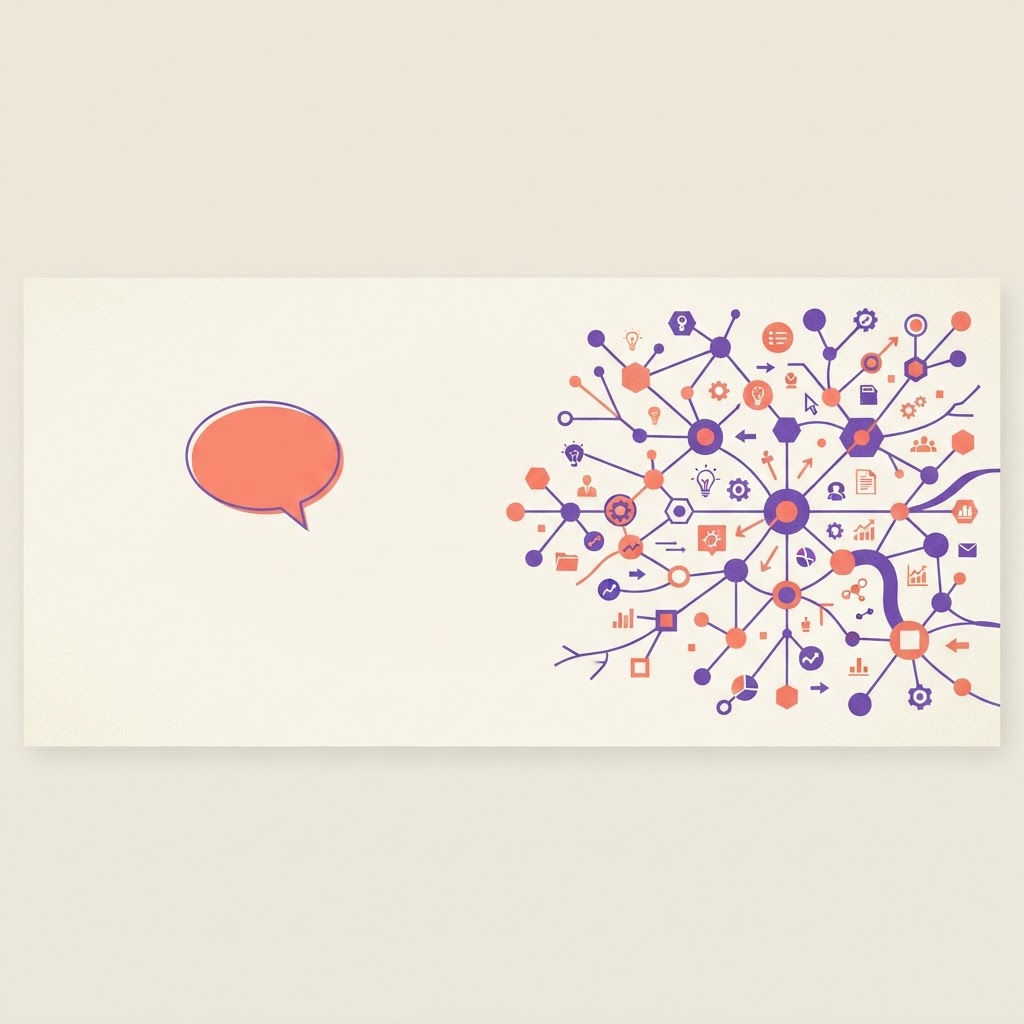
Every AI product looks the same on the surface: a text field, a reply, a blinking cursor. So when one is called a chatbot and another an agent, it is reasonable to assume marketing is doing the heavy lifting.
It is not. The difference is in how much of the work happens without you.
Three practical tests
Forget the definitions and ask three questions about any AI tool you are evaluating.
Does it stop at the answer? A chatbot returns text. An agent returns an outcome — a file, a spreadsheet, a sent message, a booked slot. If everything it produces still requires you to go do the thing, you are talking to a chatbot.
Can it act between turns? An agent can run several steps on its own: search, read, compare, retry, then report. A chatbot needs a new message from you between every step, which means you are the workflow engine.
Does it remember you? Persistent context is what turns a clever stranger into a colleague. Preferences, past decisions, your voice, the client who must never be emailed on Fridays.
Where each one is genuinely better
Chatbots are excellent at fast, low-stakes exchanges. Rename this paragraph. Translate this sentence. Explain this term. Cheap, instant, no setup, nothing to break.
Agents are better when the task has steps, takes longer than a minute, or needs current information from the web. Research, drafting from multiple sources, monitoring, and any job where the answer is the easy part and the assembly is the work.
Reach for a chatbot when the task is small, instant, and needs nothing from the outside world: a rewrite, a translation, a definition, a quick explainer.
Reach for an agent when the task has steps or needs current information: comparing six vendor quotes into one table, building a launch checklist from your notes, or producing a weekly summary of your inbox.
The trap to avoid
People buy an agent and then use it like a chatbot — one short question at a time, no context, no goal. Then they conclude agents are overhyped.
Give it a real brief instead. State the outcome, the constraints, and how you want the result delivered. The gap between those two approaches is larger than the gap between any two products on the market.
The reverse is also true. If your task is tiny, do not build a workflow around it. Sometimes a chatbot is just the right tool, and the fastest agent is the one you did not need.
Put this to work with your own agent
Start free on Base44 and hand the busywork to a cloud AI agent. Credits included.
Keep reading

What Is an AI Superagent? A Plain-English Guide
Forget chatbots that answer one question at a time. A superagent works toward a goal, uses tools, and hands back something finished. Here is what that means in practice.

15 Things You Can Hand Off to a Cloud AI Agent Today
A practical, no-theory list of real tasks worth delegating — from competitive research to chasing invoices — with the kind of brief that actually gets results.

Set Up Your First AI Agent in 10 Minutes (No Code)
A step-by-step walkthrough: pick one task, write the brief, connect it to where you already work, and put it on a schedule you will actually keep.